Website + CRM + Automation
Cleaning Business Website + CRM Case Study
How Synergy Labs helped a local cleaning business move from scattered phone calls and manual follow-ups to a website-connected CRM portal.
Canberra / ACT · 10 June 2026
Client identity withheld for privacy. Screenshots use demo data or have sensitive details removed.
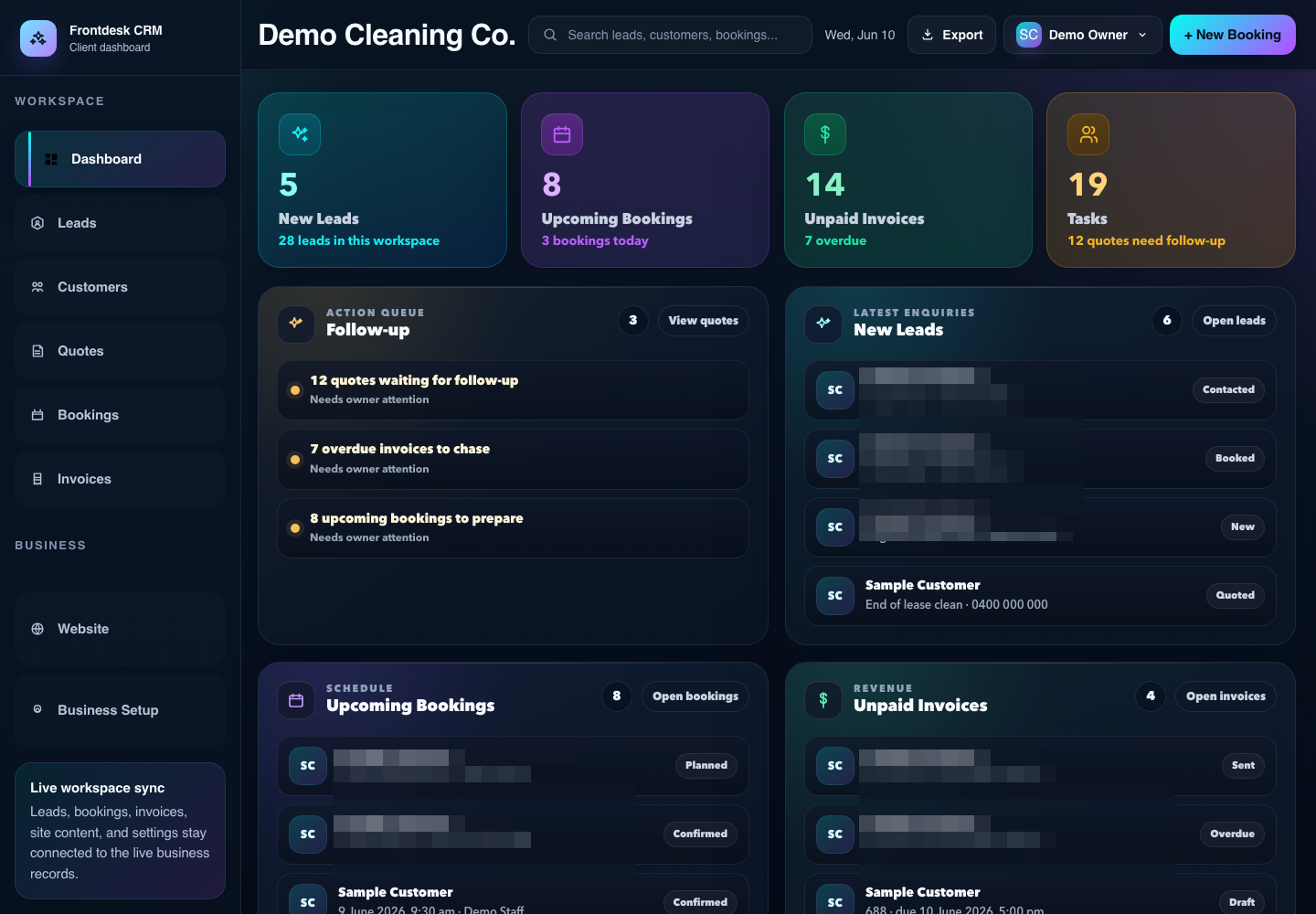
Synergy Labs helped a local cleaning business move from scattered phone calls, messages, manual follow-ups and website-builder confusion into a website-connected CRM portal for leads, bookings and follow-ups.
Project type: Website + CRM + Automation
Location: Canberra / ACT
Industry: Cleaning services
Focus: Lead capture system, booking workflow and small business CRM portal
The Situation
The owner had the motivation to grow and knew the business needed a more professional online presence. Like many small local service businesses, enquiries were coming through phone calls, messages and direct conversations, while important details lived across memory, notes and follow-up promises.
The first instinct was to try a website builder. On the surface, that makes sense. Tools can make a page look achievable: pick a template, add a few services and publish. But this project quickly showed that the harder question was not just how the website should look. It was what should happen after a customer made contact.
That is a common pressure point for local service businesses. The owner was not short on care or work ethic. The issue was that the business information, customer context and next steps were spread across too many places. A better website would help customers trust the business, but the website also needed to feed a more reliable operating rhythm.
The Real Problem
At first, this looked like a Canberra website design project. After discovery, it became clear the business needed a connected customer journey. A potential customer could call, message or enquire online, but there was no central place where that enquiry became part of a clear workflow.
For a cleaning business, the journey often looks like this: enquiry, lead, quote, booking, service, invoice and follow-up. Without a system, every step depends on manual effort. The owner has to remember who needs a reply, who needs a quote, who confirmed a booking and who should be followed up later.
A basic website alone would not solve that. The real need was a website-connected CRM that could turn a public enquiry into organised operational work.
The risk was not dramatic, but it was real: a missed message, a delayed reply, an unclear quote request or a booking that relied on memory. Those small gaps are exactly where a growing service business starts to feel busier without feeling more in control.
Discovery: Turning Confusion Into a Workflow
Synergy Labs started by understanding how the business actually operated: how customers made contact, which services needed to be explained, what information was needed before quoting, and how bookings and follow-ups should work.
This guidance stage mattered because AI tools and DIY website builders still need direction. They can generate pages, but they do not automatically decide your service structure, enquiry flow, CRM logic or follow-up process. The work was to translate a messy real-world process into a simple local service business CRM that made sense for the owner.
The discovery work turned the project from a set of pages into a practical workflow map. We looked at what a customer needs to submit, what the owner needs to see first, which stages a lead should move through and where quotes, bookings, schedule items and invoices should sit in the same customer journey.
What We Built
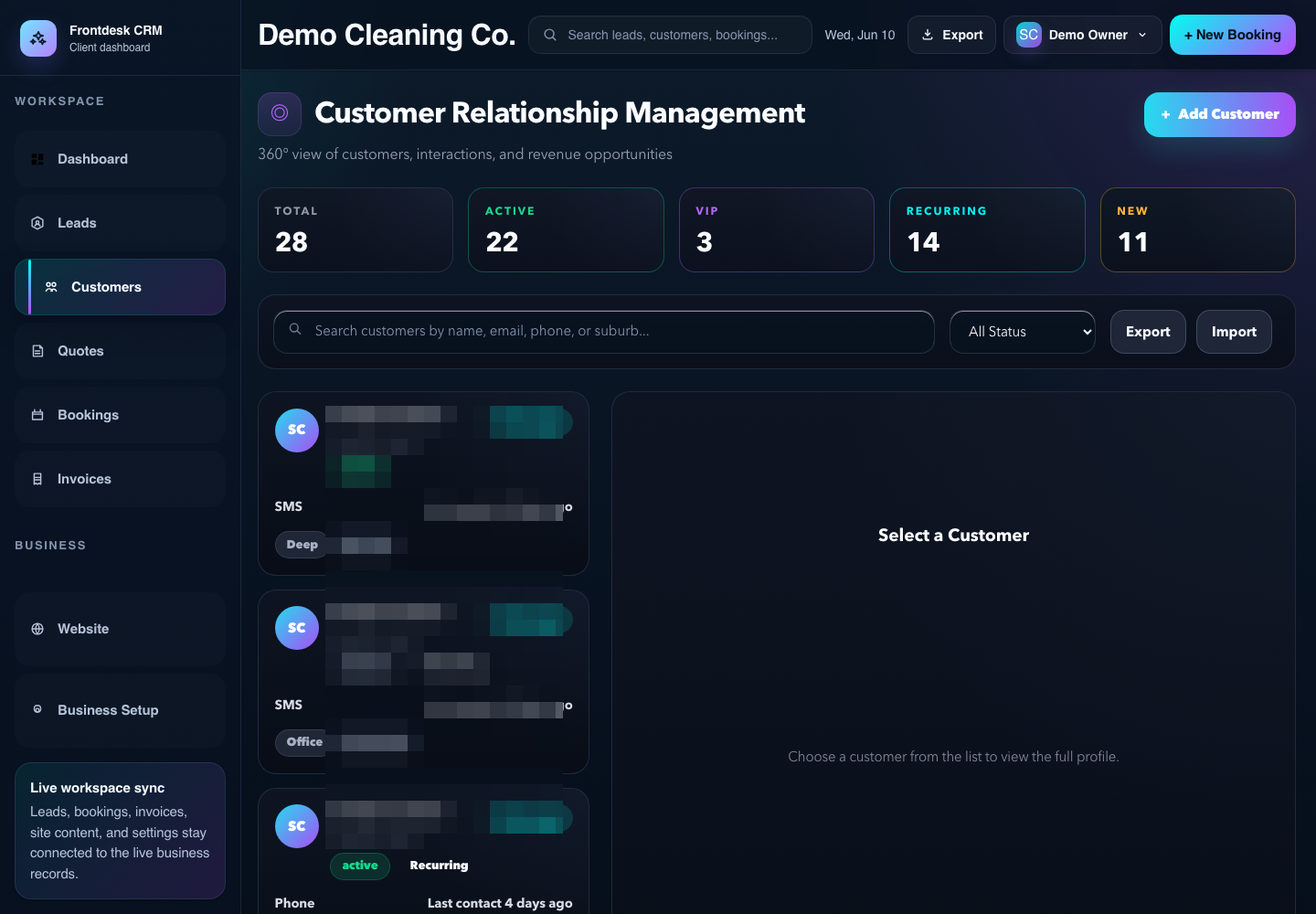
We do not just build websites. We build the system behind the website. For this anonymous cleaning business automation project, that meant a customer-facing website connected to a practical CRM portal for leads, customers, quotes, bookings, schedules, invoices and website content.
Website and Service Positioning
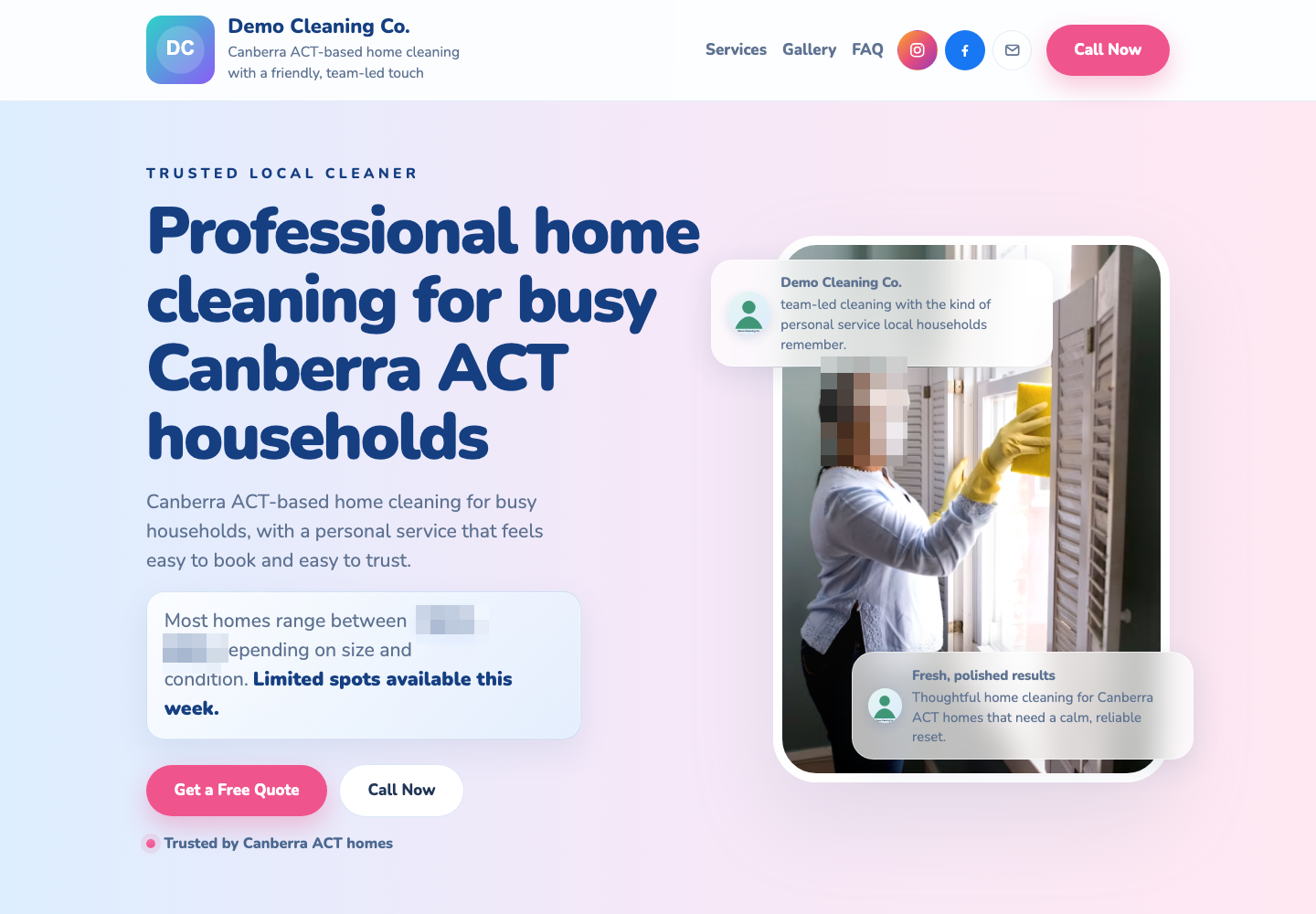
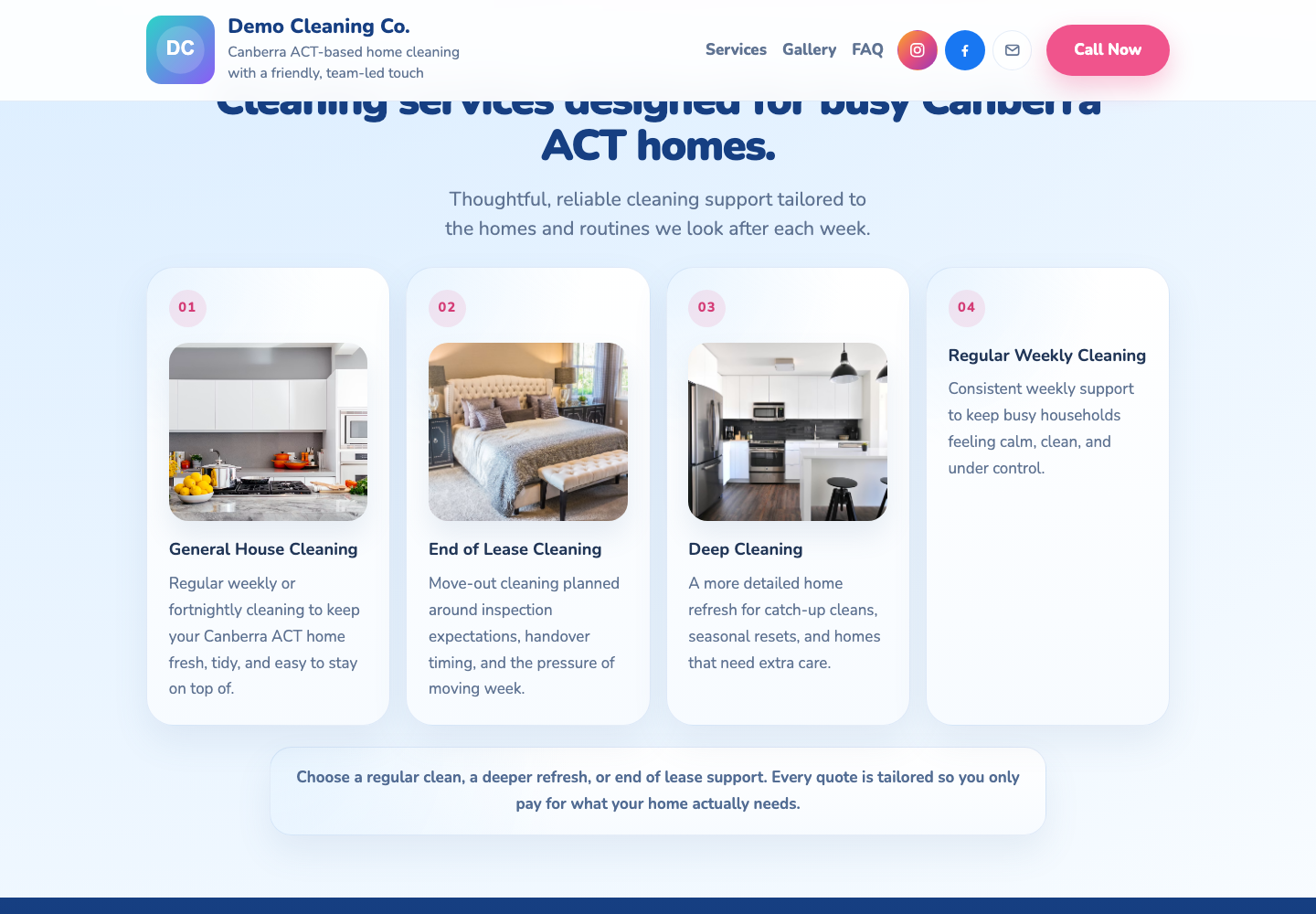
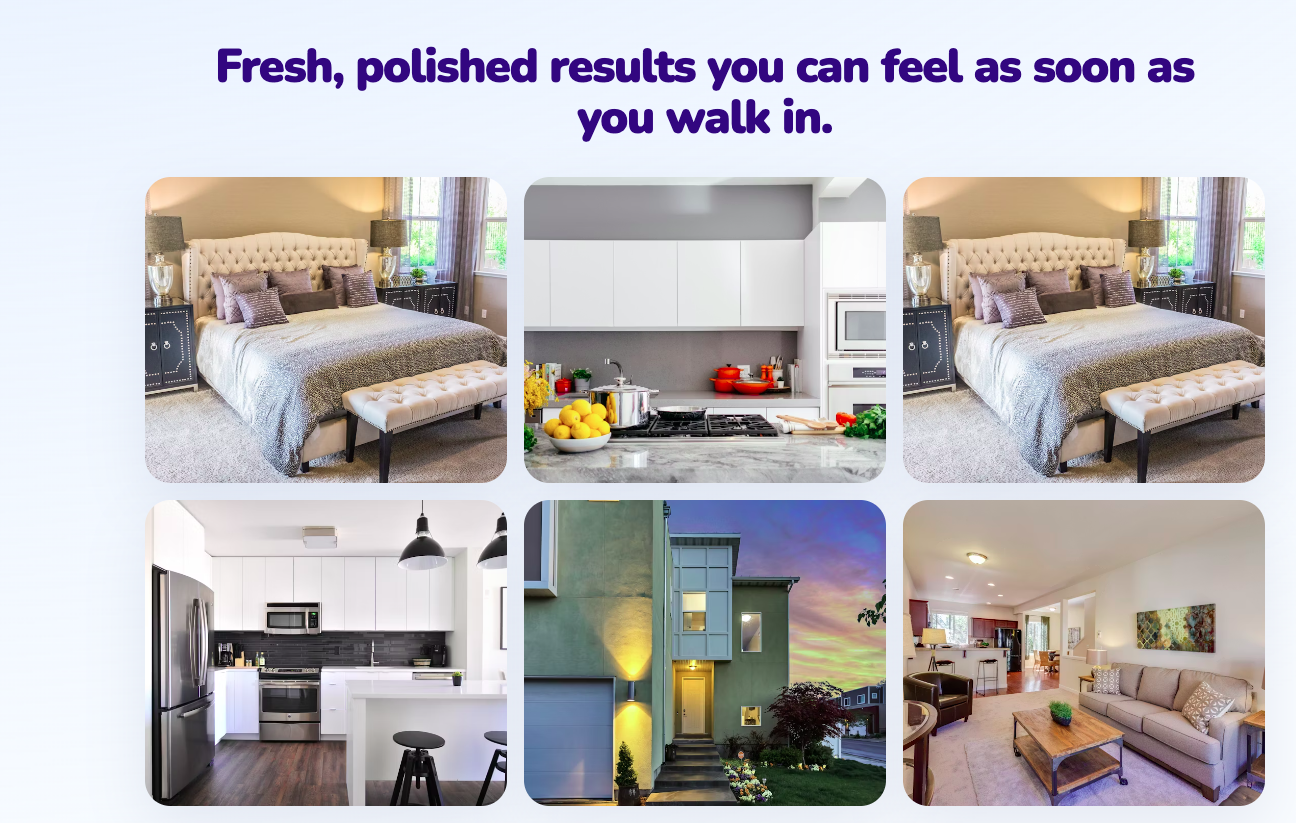
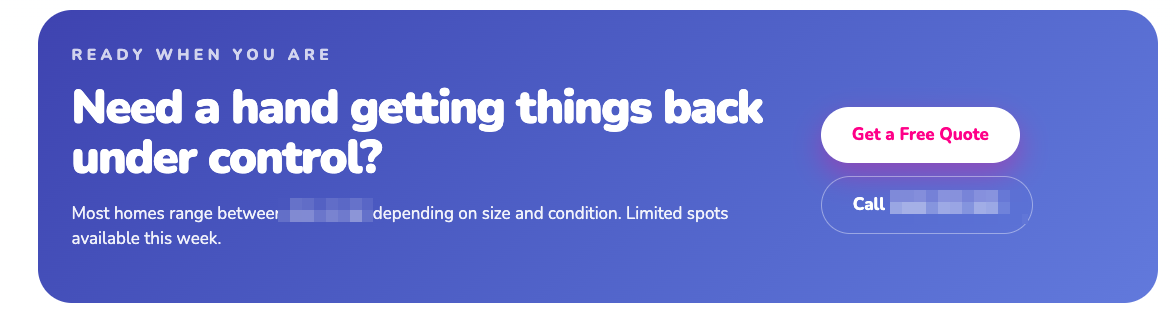
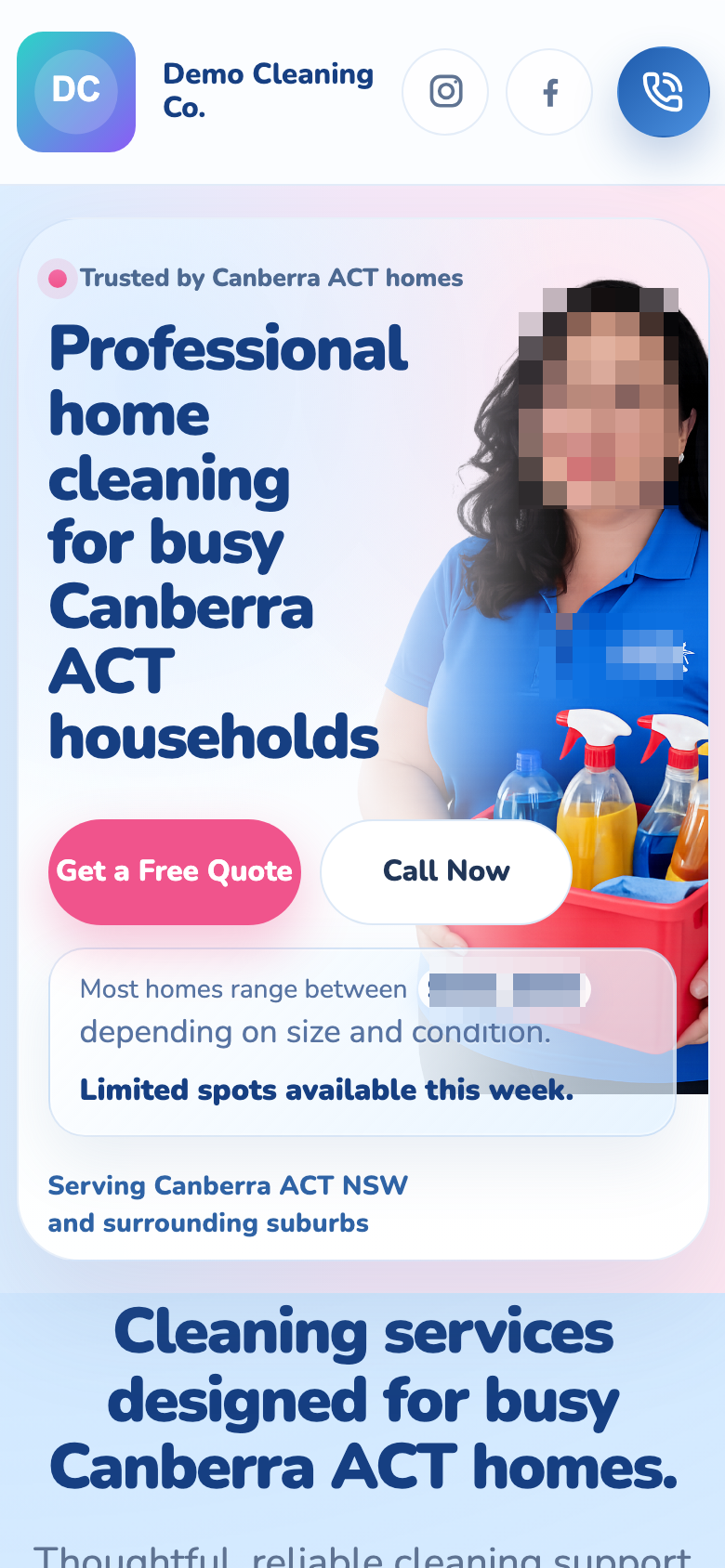
The website was structured around what a cleaning customer needs to understand quickly: who the business helps, which services are available and how to make an enquiry. Clear service positioning helped the site feel practical, credible and easier to act on.
The goal was not to make the site feel large or overproduced. The page needed to feel local, trustworthy and direct: enough service detail to reduce confusion, enough polish to build confidence and clear calls to action for people ready to enquire.


Enquiry Form and Lead Capture
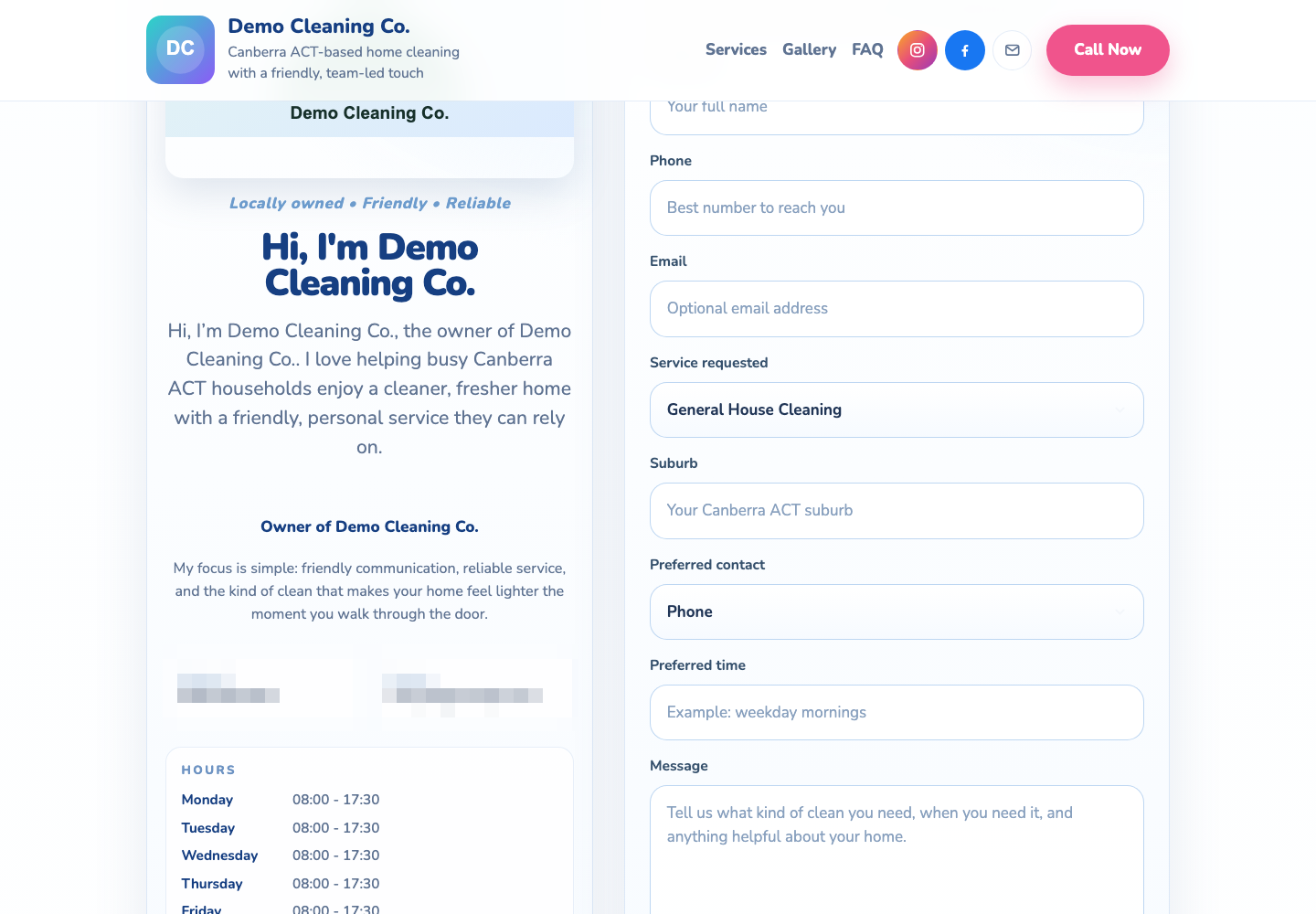
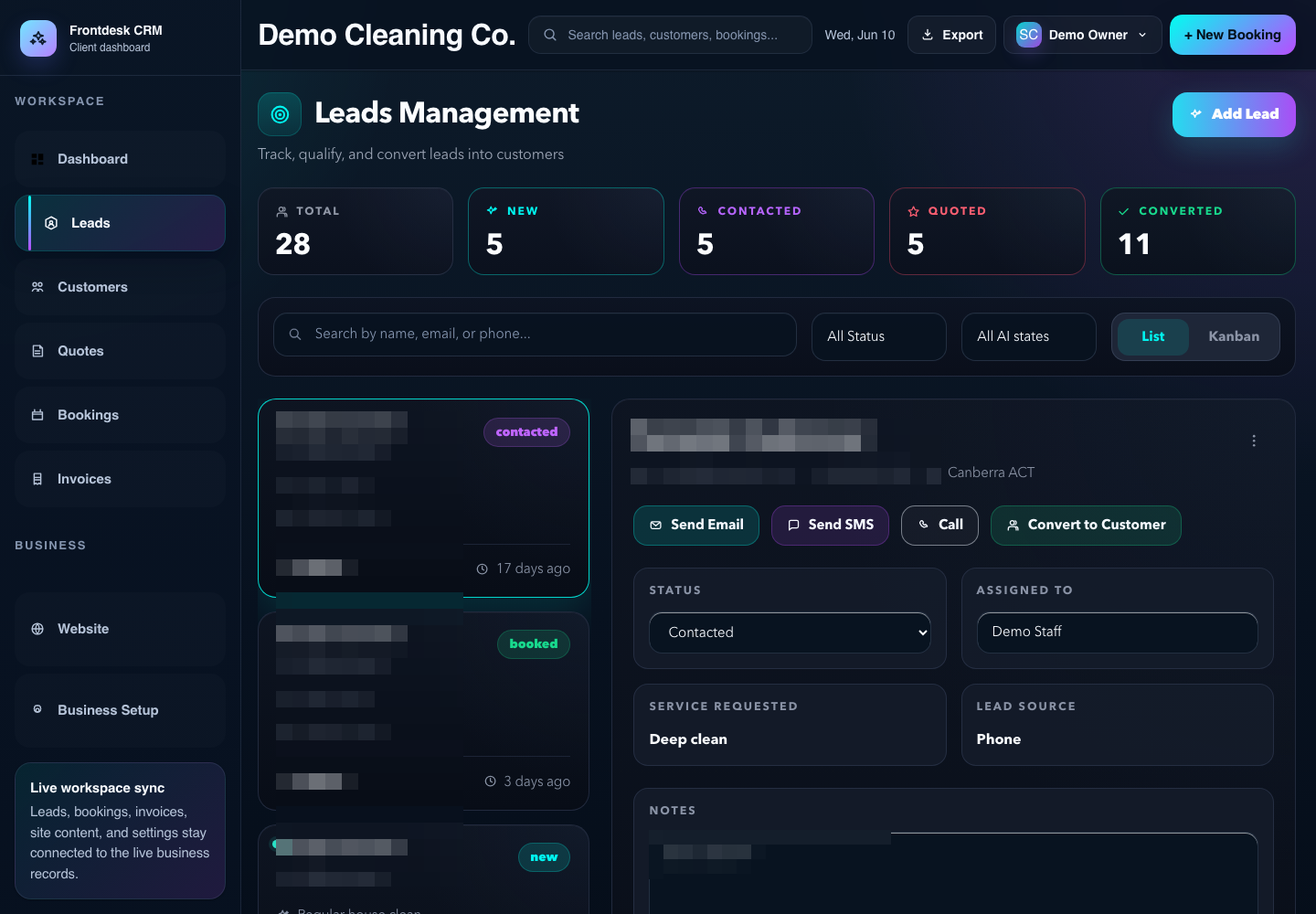
The enquiry form was a key part of the system. Instead of relying only on phone calls and scattered messages, the website could collect structured information and send it into the portal as a trackable lead.
That changed the form from a passive contact box into the first step of the sales and service workflow. The business could see what the customer needed, keep the enquiry in context and move it forward without rebuilding the story from scattered conversations.
CRM Dashboard
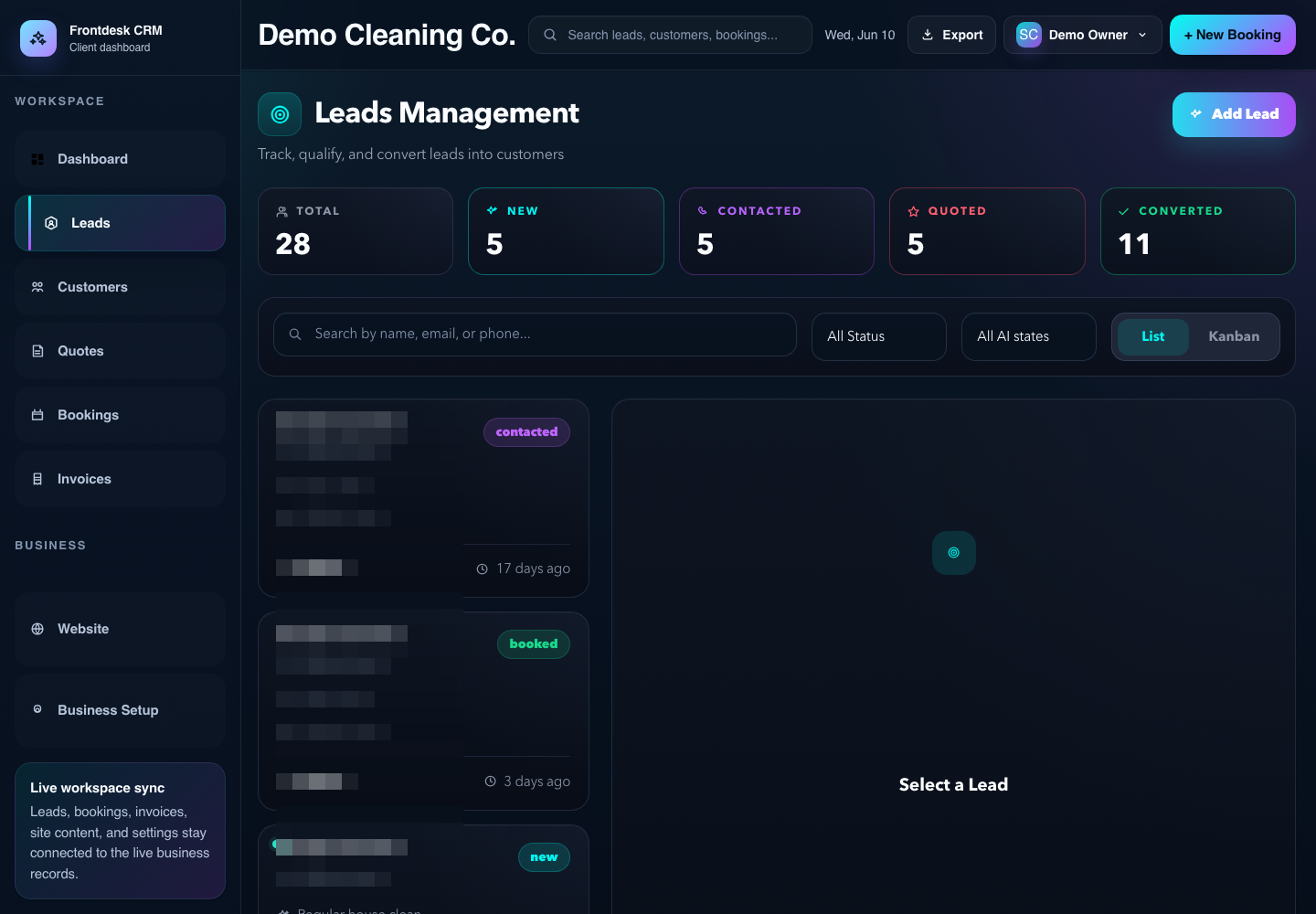
Behind the website, the business needed a clear dashboard. The CRM dashboard gave the owner one place to understand activity across leads, bookings, invoices and next actions. The point was not to create a heavy enterprise platform. It was to make everyday work more visible.
This is where the project became more than a website refresh. The dashboard gave the owner a working control area for the business, with the most important operational pieces sitting beside each other instead of being split across separate tools and memory.
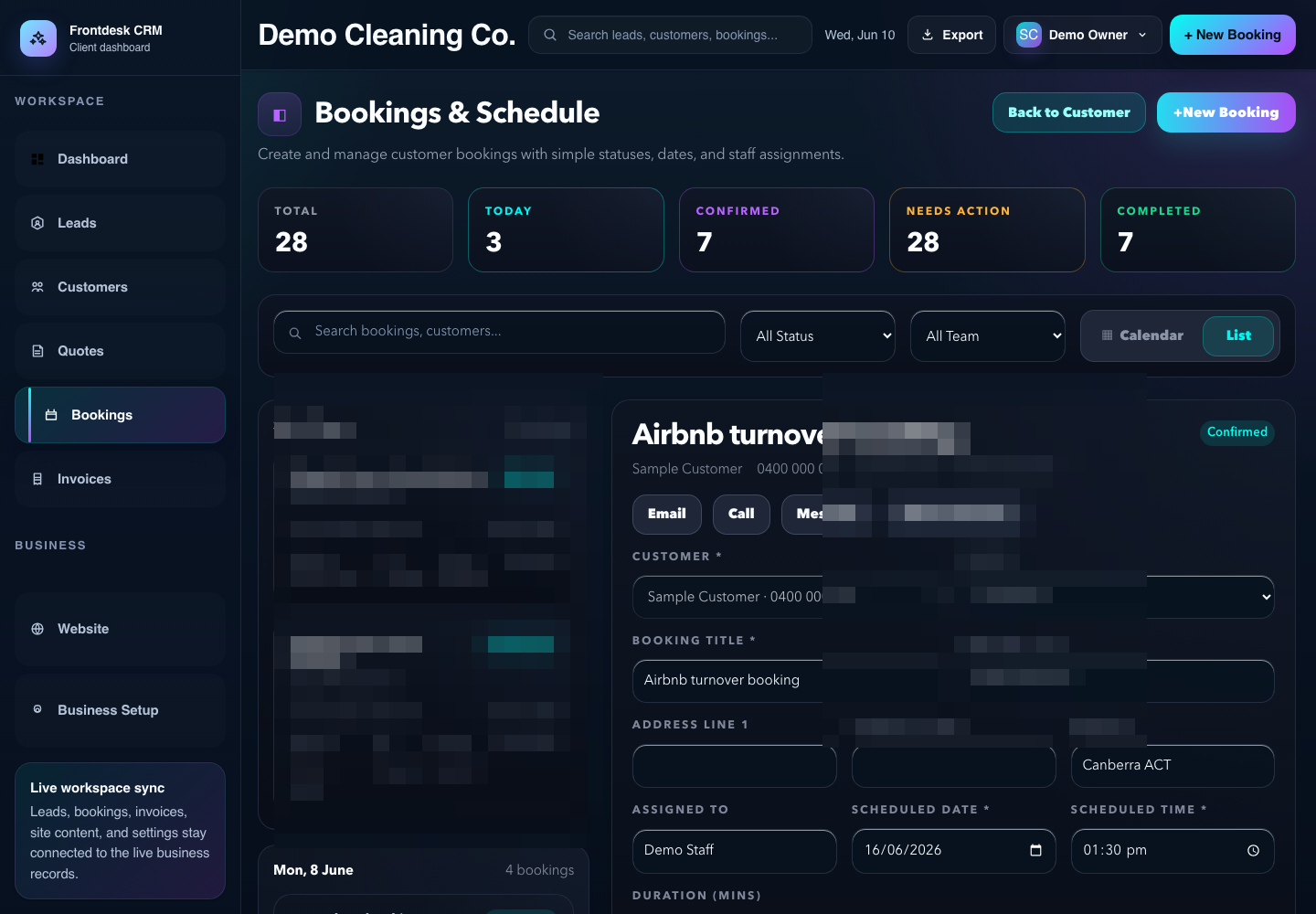
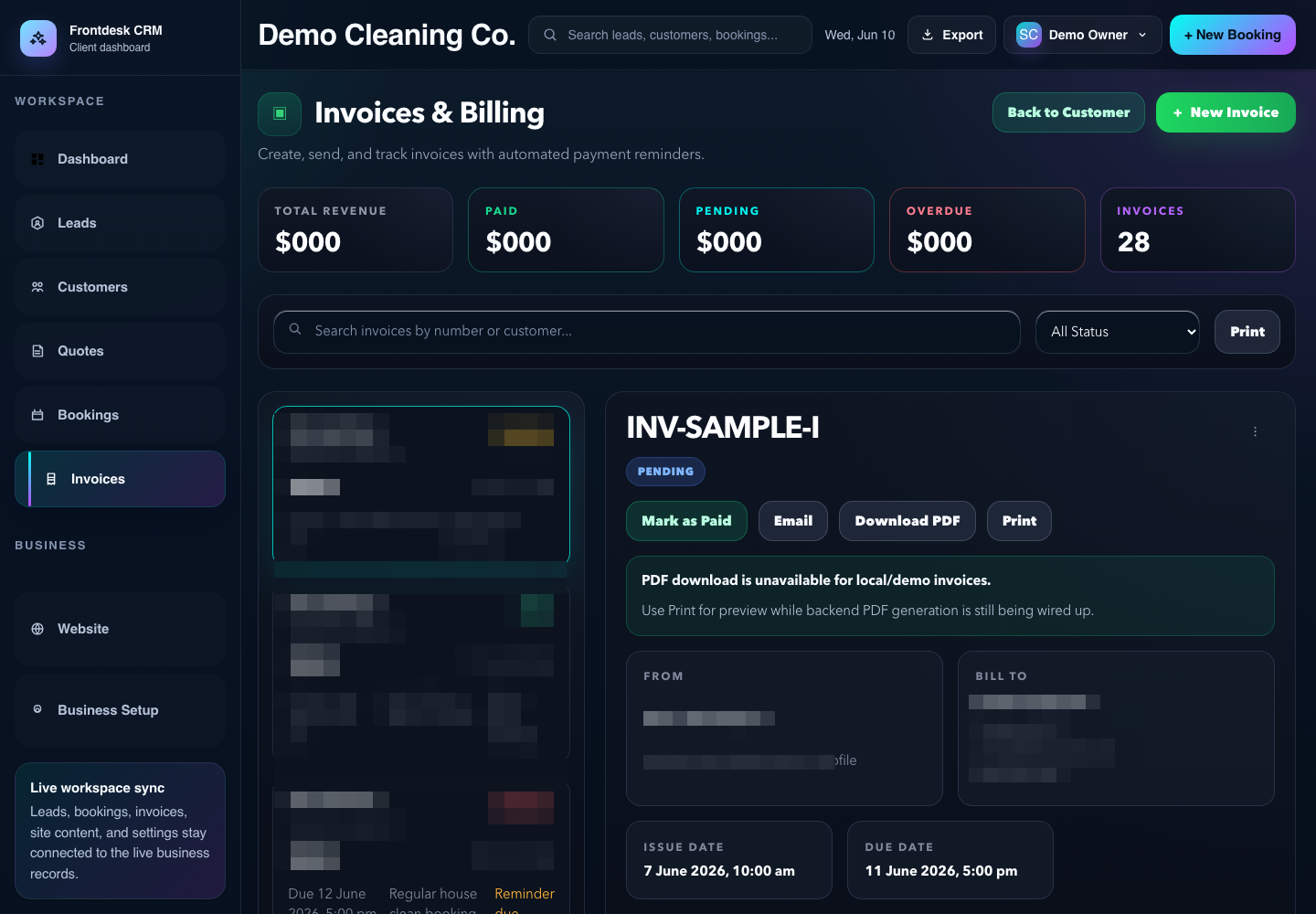
Quotes, Bookings, Schedule and Invoices
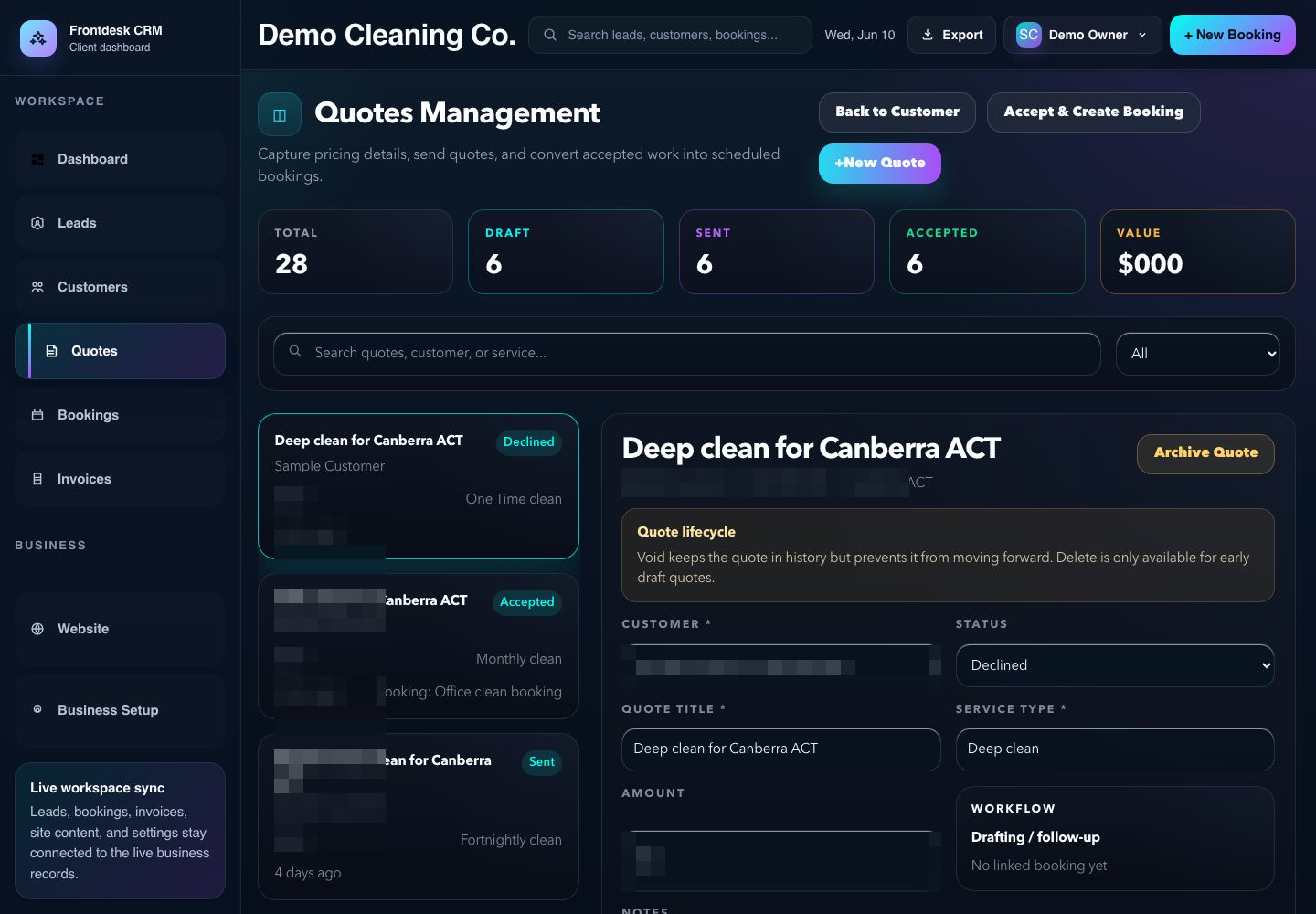
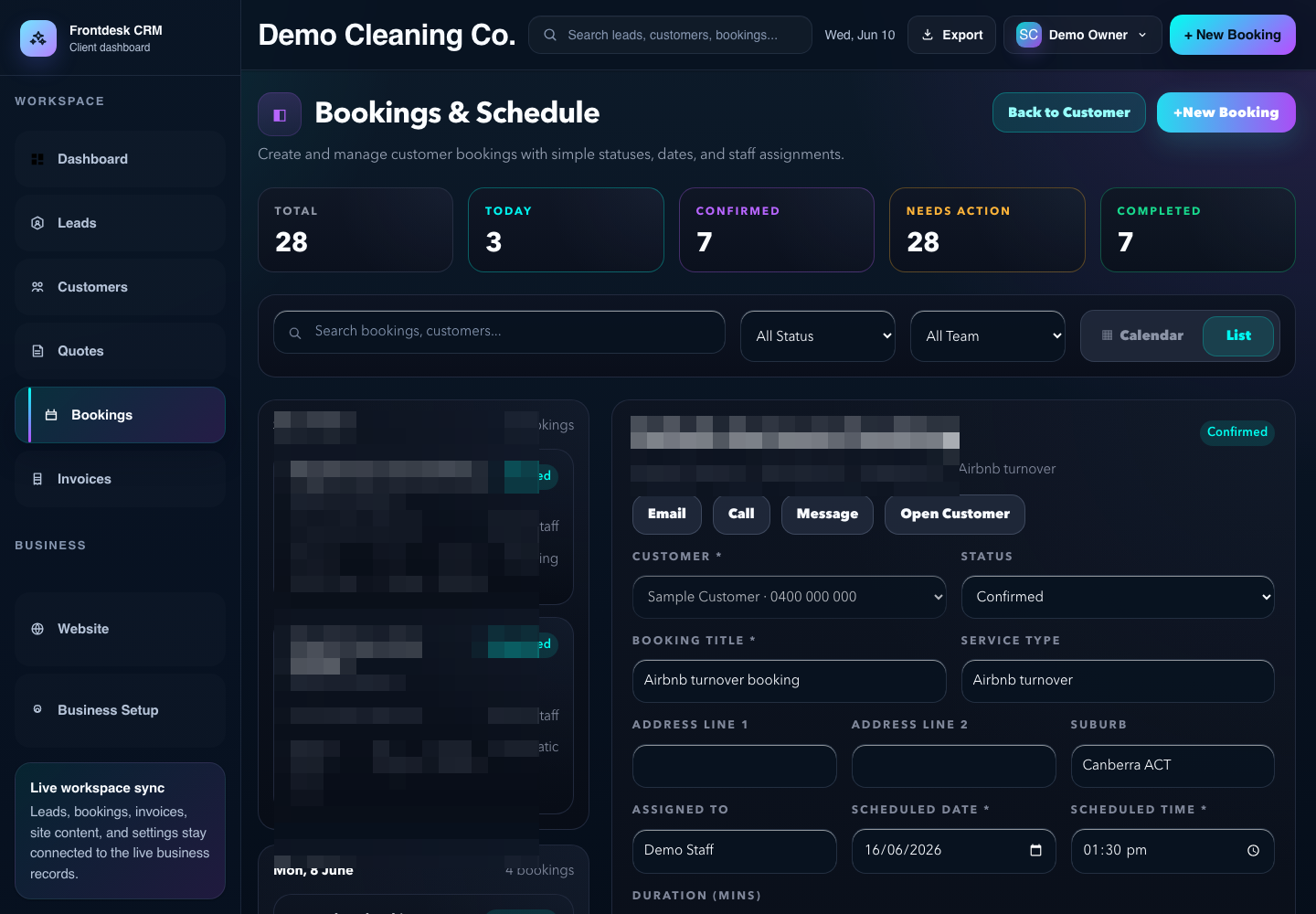
For a cleaning business, enquiries only become useful when they can move into quotes and confirmed work. The portal gave the business a workflow for quote tracking, booking visibility, schedule planning and invoice/admin visibility.
Each module had a simple job. Quotes helped the owner respond to potential customers with more consistency. Bookings and schedules helped show what work was coming up. Invoices gave the admin side a place inside the same portal rather than sitting apart from customer activity.
Website Content Control
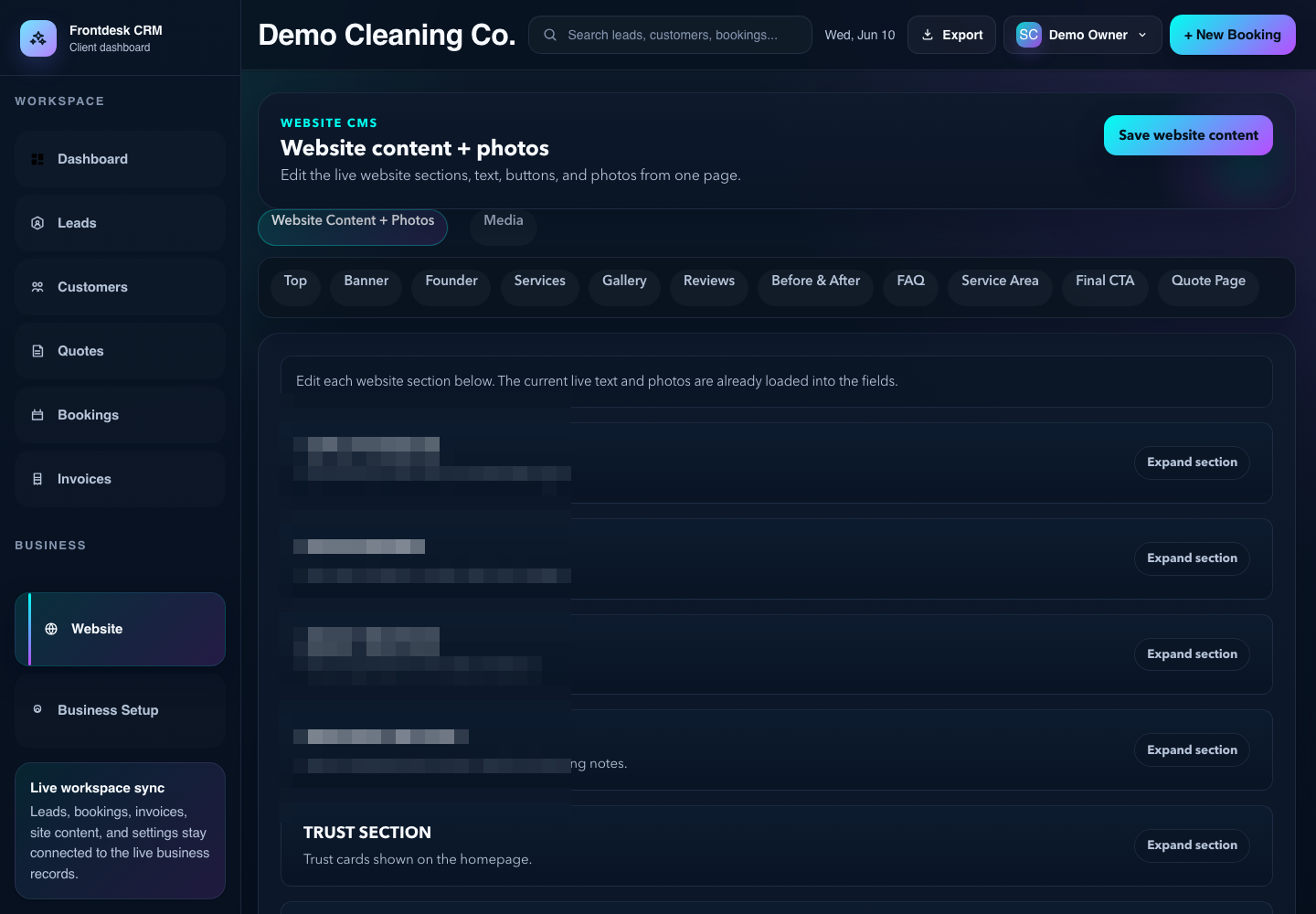
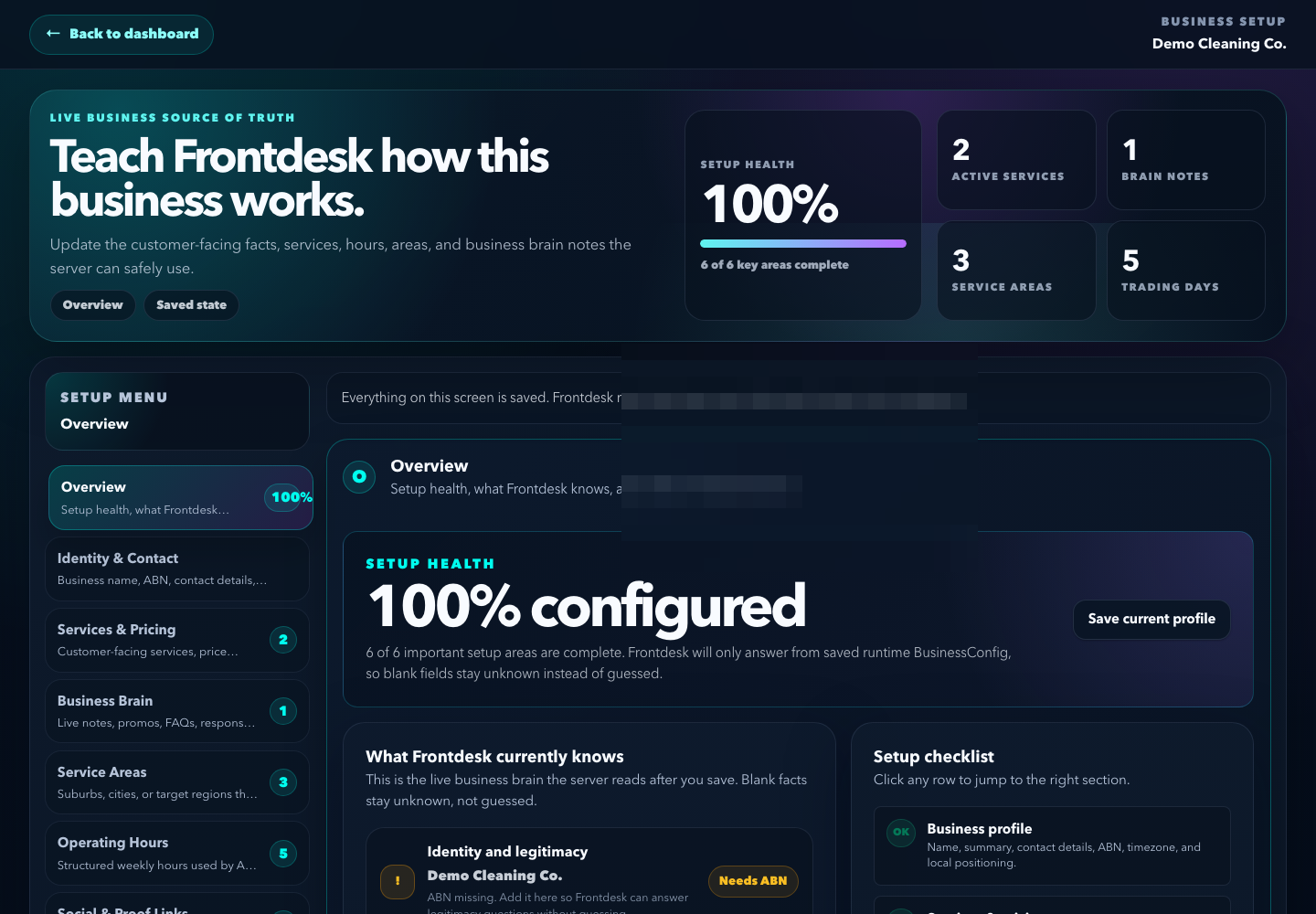
The portal also gave the business a way to manage website content. This matters because a website should not feel like a separate static asset that gets forgotten. Services, business details and customer-facing copy can evolve as the business grows.
For small businesses, that control matters. If services change, wording needs refining or the owner wants to update how the business presents itself, the website can be maintained as part of the same system rather than treated as a disconnected one-off build.
The Result
The result was a clearer foundation for how the business could operate online. Instead of trying to figure out the website, enquiry process and follow-ups separately, the owner had a more connected structure.
This case study is not about claiming overnight growth or inventing a dramatic metric. The meaningful outcome is simpler and more practical: the business now has a clearer path from first enquiry to follow-up, with a website that supports the workflow instead of sitting beside it.
- Professional online presence
- Clear service presentation
- Structured enquiry capture
- Trackable lead workflow
- Organised customer records
- Quote and booking visibility
- Schedule and invoice visibility
- Foundation for follow-up systems
Key Lesson
A website builder can help create pages, but a business needs more than pages. Small business owners often need help with structure, strategy, workflow and follow-up. For this cleaning business website CRM case study, the website was only the front door.
The real value came from connecting that front door to the system behind it. That is where a small business CRM portal becomes useful: it helps turn customer interest into organised action.
Need a Website-Connected CRM for Your Business?
If your business is still managing enquiries through phone calls, messages, notes and memory, it may be time to connect your website to a proper workflow. Synergy Labs helps local service businesses build simple website-connected CRM portals for enquiries, bookings, quotes, invoices and follow-ups.